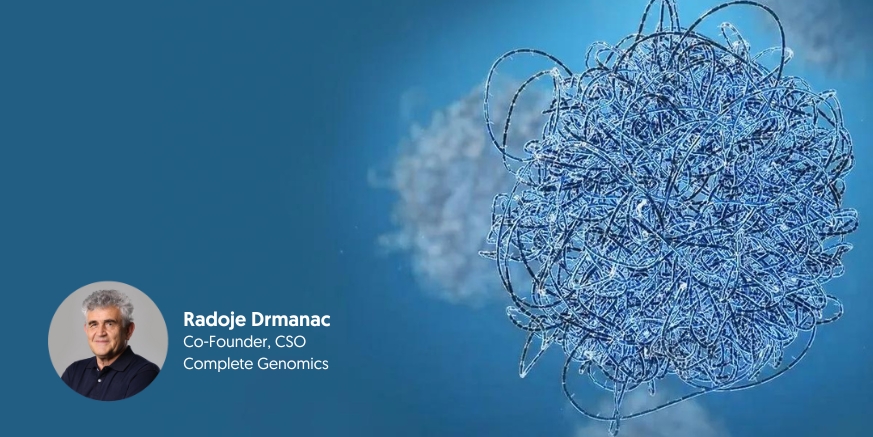
Letting the Genome Out of the Bottle

Comments on DNA sequencing technology and the coming era of genomic medicine

Empowering Patients in the Age of Genomic Medicine

Dr. Leroy Hood, president of the Institute for Systems Biology, captured the essence of genomic medicine by calling it P4 Medicine – predictive, preventative, personalized, and participatory. Genomic medicine represents a shift in the way we practice medicine. To understand this change, it is helpful to compare today’s patients and doctors to those of, say, 1993. Back when Nirvana was ruling the airwaves, medicine was still mostly reactive. A patient became sick—sick enough to see a doctor—then the doctor opaquely ordered tests, made a diagnosis, and prescribed therapy while the patient passively received care. That was the old paradigm. Today, the Web has helped to demystify and democratize medicine. Many patients are now well-informed before they seek medical care and they want to actively participate in their diagnosis and therapy choices.

Read More

Comparing Performance Data – Taking a Different Perspective

A recent paper in Nature Biotechnology (Lam et. al, 18 Dec 2011) reports on the results of sequencing the same human genome at an average coverage depth of 76x using two different sequencing technologies. The authors, all from the Snyder lab at Stanford University, compared the accuracy and sensitivity of results obtained using an Illumina HiSeq 2000 instrument and Complete Genomics’ whole genome sequencing service.

To our knowledge, this is the only published direct comparison of the two platforms, and we applaud the authors for having undertaken this analysis. We eagerly dived into their comparison data to see what we could learn.

Read More

The Beginning of the End for Exome Sequencing

Updated to clarify information about commercial exome kits

Today, researchers use two approaches to identifying disease-associated variants in the human genome: exome sequencing, which targets the protein-coding regions that make up approximately 1% of the genome, and whole genome sequencing, which investigates the vast majority of the genome and includes both coding and non-coding regions.

Read More

How Low Can We Go? Molecules, Photons, and Bits

The dramatic decline in the cost of sequencing whole human genomes over the past five years surprised even the most optimistic scientists (except possibly George Church). Starting from Roche 454’s $1 million Watson genome in 2006, we are now sequencing genomes for a few thousands of dollars each.

Read More

Opportunity Knocks Twice

Back in college, my classmates were enthusiastically enrolling in classes with Professor Walter Gilbert, Nobel Prize winner in chemistry and a father of modern genetic sequencing. Not me. In those days I was either buried in the library stacks researching my undergraduate thesis or throwing myself into the maelstrom of student politics. But now as Chief Commercial Officer at Complete Genomics, I’ve been given something rare in life – a second chance.

Read More

About This Blog

Dr. Clifford Reid
Chairman, President and CEO

Dr. Reid is a successful, serial entrepreneur. He enjoys commercializing disruptive computing and life sciences technologies.

Dr. Rade Drmanac
Chief Scientific Officer

Dr. Drmanac is a genome sequencing pioneer; his inventions include massively parallel DNA sequencing by hybridization and combinatorial probe ligation. As a group leader at the Argonne National Labs, he was part of the Human Genome Project. In 1993, he cofounded Hyseq, one of the first genomic companies.

Legal Notice

Subscribe

From Twitter

Copyright © 2013 Complete Genomics Incorporated. All rights reserved. Use of this website signifies your agreement to the Terms of Use and Online Privacy Policy. Contact Webmaster.